

Skip to content
Peer-reviewed Research

Theoretical and Empirical Foundations for a Unified Pyramid of Human Motivation

PUBLISHED IN

Integrative Psychological and Behavioral Science

SHARE

Available Now

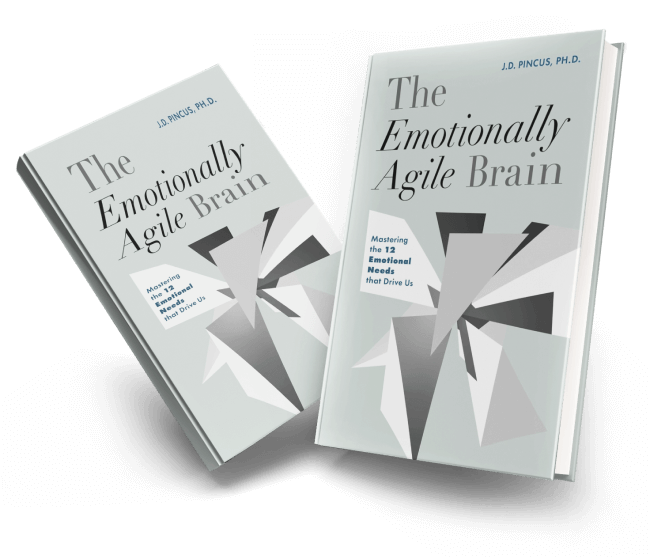
The Emotionally Agile Brain

Mastering the 12 Emotional Needs that Drive Us

by J.D. Pincus, Ph. D.

Discover What Motivates You

The AgileBrain exercise takes just 3 minutes. Discover the motivational drivers beneath your behavior — and what they mean for where you are right now.

30-Day FREE Trial

We stand behind our science. Try AgileBrain free for 30 days and see what motivation intelligence can do for your organization.

Published in: Integrative Psychological and Behavioral Science

J.D. Pincus proposes a significant revision to Forbes’ taxonomic model of human motivation by introducing a new, fourth life domain: the spiritual. It explores extensive literature on spiritual motives and suggests that the spiritual domain, which includes justice, moral, and transcendental motivations, is an essential part of human life not covered by Forbes’ original three domains. The study contrasts Forbes’ model with thirteen other theoretical frameworks that also incorporate spirituality, arguing for the importance of recognizing spiritual needs—such as fairness, morality, and altruism—as a distinct domain. The revised model links the spiritual domain with the Intrapsychic and Interpersonal domains, forming a pyramid structure and presenting new opportunities for research and hypothesis testing. This addition provides a more comprehensive understanding of human motivation, especially regarding universal needs that have led to spiritual systems across cultures.

Theoretical and Empirical Foundations for a Unified Pyramid of Human Motivation

Read Full Article
J.D. Pincus, Ph.D. is Chief Innovation Officer at Leading Indicator Systems (d/b/a AgileBrain), focusing on emerging methods for measuring emotion and motivation. He developed the unified pyramid model of human motivation and the AgileBrain measurement technique. He published his model in Integrative Psychological and Behavioral Science, and has gone on to apply the pyramid model to the problems of Human Values, Employee Engagement, Subjective Well-Being, Organizational Culture, Leadership Effectiveness, Team Effectiveness, and Human Goals. His seminal article on the concept of motivation in applied psychology, published in the Journal of Consumer Behaviour, has been cited in 222 subsequent papers. He lives in Massachusetts, with his wife, a Maltipoo puppy named Bean, and a black cat named Salem. His book, The Emotionally Agile Brain: Mastering the 12 Emotional Needs that Drive Us, was recently published by Rowman & Littlefield/Bloomsbury.

Continue Reading